
What Emotional Balance Looks Like in Real Life
What Emotional Balance Really Is
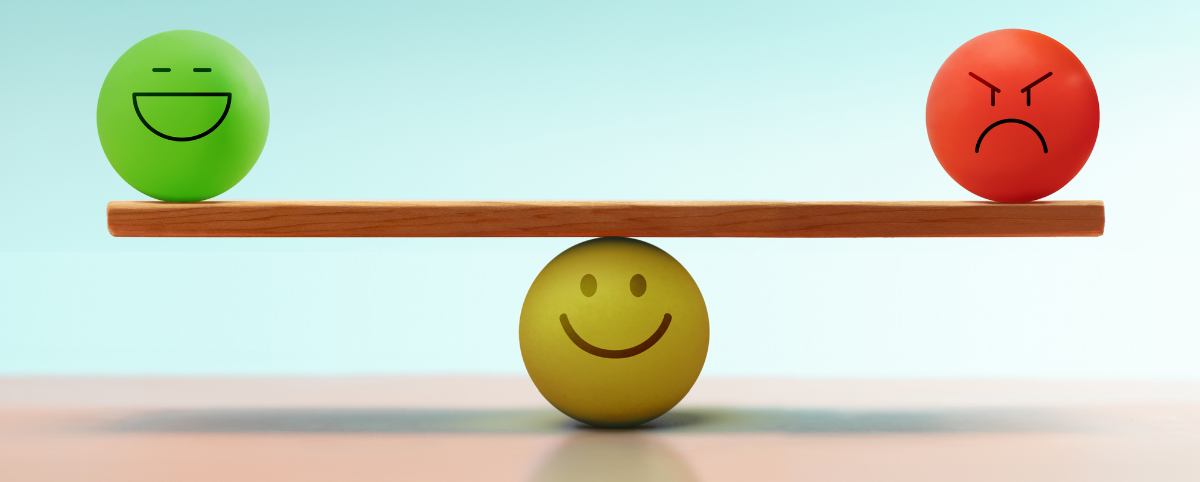
“Just stay balanced.”
It sounds simple. Clean. Almost peaceful.
But if you’ve ever tried to actually live that out—on a random Tuesday, after a stressful day, when your patience is gone and your mind won’t slow down—you know the truth:
Emotional balance isn’t calm.
It isn’t perfect control.
It isn’t the absence of frustration, anxiety, anger, or overwhelm.
Real emotional balance is messier than that.
It’s not about
never losing it.
It’s about what happens
after you do.
The Version Everyone Thinks It Is
Most people imagine emotional balance as someone who is:
- Always calm
- Never reactive
- Patient at all times
- In control of their thoughts and emotions
Basically, a version of a human who doesn’t exist.
That image creates a quiet kind of shame.
Because when you snap at your spouse…
Or feel overwhelmed by your kids…
Or spiral in your own thoughts…
You don’t think, “This is normal.”
You think:
“Why can’t I just get it together?”
That’s where most people get stuck—not in the emotion itself, but in the judgment of it.
The Story No One Sees
Mark sat in his car in the driveway longer than he needed to.
Engine off. Hands still on the steering wheel.
He had just gotten off a brutal day at work. Deadlines missed. Conversations that didn’t go well. That constant, quiet pressure sitting in his chest.
Inside, he could see the kitchen lights on. His wife moving around. His kids probably finishing homework.
He took a breath.
Just go inside. Be normal.
The moment he walked in, his youngest ran up to him.
“Dad! You said you’d help me with my project!”
Mark forced a smile. “Yeah, buddy, just give me a minute.”
His wife looked over. “Can you also take a look at the bill that came in? Something’s off.”
And just like that, the pressure broke.
“Can I just walk in the door before I get hit with everything?” he snapped.
Silence.
His son froze. His wife’s expression shifted.
And immediately—almost instantly—Mark felt it.
Regret. Guilt. That sinking feeling in his chest.
That wasn’t fair.
He could feel the urge to defend himself rising.
I had a long day. No one gets it. I’m allowed to be frustrated.
But something in him paused.
Instead of doubling down… instead of shutting down… instead of pretending nothing happened…
He took a breath.
“I’m sorry,” he said, quieter this time. “That wasn’t about you.”
Another pause.
“I had a rough day… but that’s not your fault.”
The tension didn’t vanish. The moment wasn’t magically fixed.
But something shifted.
Not because he stayed perfectly calm.
But because he came back to himself.
That Moment Right There—That’s Emotional Balance
Not the frustration.
Not the snap.
But the awareness… the pause… the repair.
That’s what emotional balance actually looks like.
What Emotional Balance Really Is
At its core, emotional balance is not about controlling emotions.
It’s about regulating your response to them.
Psychologists define emotional regulation as the ability to:
- Recognize emotions as they arise
- Understand what’s driving them
- Respond in a way that aligns with your values—not just your impulses
Research by James Gross, a leading expert in emotional regulation, highlights that emotions are not the problem—unregulated reactions are.
In other words:
You’re not failing because you feel overwhelmed.
You struggle when you don’t know what to do with that overwhelm.
Why Most People Feel “Out of Balance”
It’s not because they’re too emotional.
It’s because they’ve never been taught how to process emotion in a healthy way.
Most people grow up learning one of two patterns:
1. Suppression
“Don’t cry.”
“Calm down.”
“Just ignore it.”
So you learn to push emotions down… avoid them… pretend they’re not there.
But suppressed emotions don’t disappear.
They build.
And eventually, they come out sideways:
- Irritability
- Anxiety
- Overreactions
- Emotional shutdown
2. Reactivity
On the other side, some people never learned to pause.
They feel → they react.
Immediately.
Without space.
Without reflection.
Which leads to:
- Saying things they regret
- Escalating situations
- Feeling controlled by their emotions
Neither of these is balance.
Balance lives in the space between suppression and reaction.
The Truth Most People Need to Hear
You are not supposed to feel good all the time.
Let that land.
Emotional balance is not about eliminating negative emotions.
It’s about being able to say:
“I feel this… and I’m still in control of how I respond.”
That’s a completely different level of stability.
The Science Behind “The Pause”
One of the most powerful concepts in emotional regulation is the gap between stimulus and response.
Neurologically, this involves two key parts of the brain:
- The amygdala → your emotional alarm system (fast, reactive)
- The prefrontal cortex → your rational thinking center (slower, deliberate)
When something triggers you, the amygdala fires first.
That’s why reactions feel immediate and intense.
But with awareness and practice, you can engage the prefrontal cortex before acting.
That’s the pause.
And research shows that even a brief pause—just a few seconds—can significantly reduce impulsive reactions and improve decision-making.
That’s not theory.
That’s trainable.
A Framework You Can Actually Use
If emotional balance feels abstract, here’s a practical way to approach it.
Not perfection. Just progress.
1. Notice (Awareness)
You can’t regulate what you don’t recognize.
Start by identifying what you’re feeling—specifically.
Not just “I’m stressed.”
But:
- “I feel overwhelmed.”
- “I feel frustrated.”
- “I feel anxious.”
Labeling emotions has been shown in research to reduce their intensity—this is called affect labeling.
It literally helps calm the brain.
2. Name the Trigger
Ask:
- What just happened?
- Why did this hit me the way it did?
Often, the reaction isn’t about the moment.
It’s about something deeper:
- Feeling disrespected
- Feeling out of control
- Feeling overwhelmed
Clarity reduces chaos.
3. Pause (Create Space)
This is the most important step.
Before you react:
- Take a breath
- Step away if needed
- Give yourself even 10–30 seconds
That small gap is where control lives.
4. Choose Your Response
Instead of asking:
“What do I feel like doing?”
Ask:
“What response aligns with who I want to be?”
That shift is everything.
5. Repair When Needed
You will mess this up sometimes.
Everyone does.
Emotional balance includes the ability to say:
- “That wasn’t fair.”
- “I overreacted.”
- “I’m sorry.”
Repair builds trust—with others and with yourself.
Back to Mark
That night didn’t turn into a perfect family moment.
There was still tension.
But later, Mark sat next to his son and helped with the project.
Not because he felt like it.
But because he chose to show up differently.
And over time, those moments stack.
Not perfection.
But awareness → pause → response → repair.
That’s what changes relationships.
That’s what builds emotional strength.
What Emotional Balance Feels Like Over Time
It’s subtle.
You don’t suddenly become a different person.
But you start to notice:
- You recover faster after emotional spikes
- You say fewer things you regret
- You understand your triggers better
- You feel less controlled by your reactions
- You feel more… steady
Not emotionless.
Just grounded.
The Shift That Changes Everything
Most people think:
“I need to control my emotions.”
But control creates tension.
Suppression creates pressure.
Avoidance creates distance.
The real shift is this:
“I need to understand my emotions—and lead myself through them.”
That’s emotional balance.
Final Thought
You’re going to have bad days.
You’re going to feel overwhelmed. Irritated. Anxious. Frustrated.
That doesn’t mean you’re failing.
It means you’re human.
Emotional balance isn’t about never losing your footing.
It’s about knowing how to find it again.
Faster. More intentionally. With less damage.
So the next time you feel it building—the pressure, the reaction, the urge to snap or shut down—
Don’t aim for perfect.
Aim for this:
Notice it.
Pause.
Choose better.
Repair if needed.
That’s it.
That’s the work.
And over time, that work becomes who you are.
Whether you prefer meeting in person at one of our two locations or connecting through online counseling, support is available in a way that fits your life.